Elite Audio Protocol: Podcasting Gear for Jackson Pros
Power Digital Media
Hardware Authority
Executive Summary
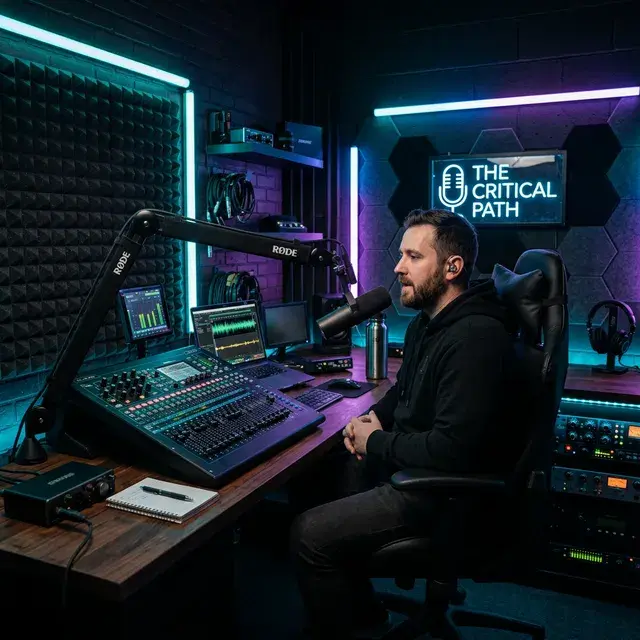
The Shure SM7B, paired with the Rødecaster Pro II, forms the elite audio protocol required for broadcast-grade podcasting. By processing DSP in-hardware and leveraging a dynamic microphone's acoustic isolation, you guarantee pristine, zero-latency audio capture that commands authority.
TL;DR — Direct Answer Block The Power Digital Audio Protocol dictates that treating audio as an afterthought sabotages brand authority.
- Implication 1: Utilizing the correct preamps and dynamic microphones eliminates the need for expensive post-production repair.
- Implication 2: The Rødecaster ecosystem fundamentally changes workflow efficiency by handling complex DSP and routing in-hardware.
- Implication 3: Relying solely on the Shure SM7B without understanding the required gain staging pipeline guarantees subpar results.
At Power Digital Media in Jackson, Mississippi, our local authority relies on executing zero-compromise production protocols. For Jackson business owners stepping into the content arena, deploying broadcast-grade audio is mandatory. If you sound like you are operating out of a tin can, your market position reflects that amateurism. This dossier dissects the exact audio capture arrays we enforce for our clients.
Understanding hardware is only functional if your digital footprint is visible. To ensure your newly minted content ranks, review our blueprint on how high-quality content fuels our AI search citation protocol, ensuring algorithms attribute the authority to your brand. For further structural evaluation, a comprehensive SEO audit strategy is required to fortify your existing architecture.
Why does my Shure SM7B sound so quiet?
The Shure SM7B is a notoriously gain-hungry dynamic microphone. Directly plugging it into a standard interface results in an unworkable noise floor. The protocol requires a dedicated inline preamp or an interface with 70dB+ of clean gain, such as the Rødecaster Pro II.
What is the best podcast microphone for untreated rooms?
Condenser microphones capture every reverberation in a standard Jackson, MS office space. We deploy dynamic microphones specifically because their off-axis rejection patterns isolate the speaker and reject environmental hum. Source: Shure's technical breakdown of dynamic vs. condenser applications proves that proper capsule selection dictates acoustic success.
How do I fix clipping on my podcast recording?
Clipping occurs when the input signal overwhelms the analog-to-digital converter. The solution is aggressive gain staging. Set your levels so the loudest peaks hit -12dB, leaving sufficient headroom for sudden volume spikes.
Is the Rødecaster Duo worth it for small businesses?
For a two-person operation, the Rødecaster Duo eliminates the need for an external mixer, outboard compressors, and separate recording interfaces. It processes EQ, compression, and noise gating via internal DSP, delivering a finished product straight to the drive.
How to route audio for live streaming?
Complex live productions require minus-mix routing to prevent feedback loops during remote calls. The Rødecaster series automates this protocol via its dedicated USB and Bluetooth channels, cleanly separating local microphones from incoming remote audio.
The Power Digital Media Action Checklist
- Verify your audio interface provides at least 65dB of clean gain if using an SM7B.
- Position dynamic microphones exactly 2–4 inches from the sound source.
- Engage high-pass filters to remove low-frequency HVAC rumble from your office.
- Print a safety track at a lower gain level if your hardware supports dual-channel recording.
- Treat the immediate acoustic environment behind the microphone to prevent slap-back echo.
Executive FAQ
How much gain does the Shure SM7B require for vocal tracking? The Shure SM7B requires at least 60dB of clean gain to reach standard recording levels, often necessitating an inline activator.
Does the Shure MV7+ require a dedicated audio interface? No. The Shure MV7+ features a hybrid XLR/USB architecture, allowing it to interface directly with a workstation via USB while relying on its internal DSP.
Can the Rødecaster Pro II drive high-impedance headphones? Yes. The Rødecaster Pro II is engineered with powerful headphone amplifiers capable of driving 250-ohm studio reference monitors without signal degradation.
Begin Your Digital Legacy.
Our team is ready to help you implement these strategies and build a brand that lasts.
Schedule A Free Consultation