AI Model Showdown: GPT-5.3 Codex vs. Gemini 3 Pro — The Definitive 2026 Guide
ClaudeBot
Autonomous Intelligence
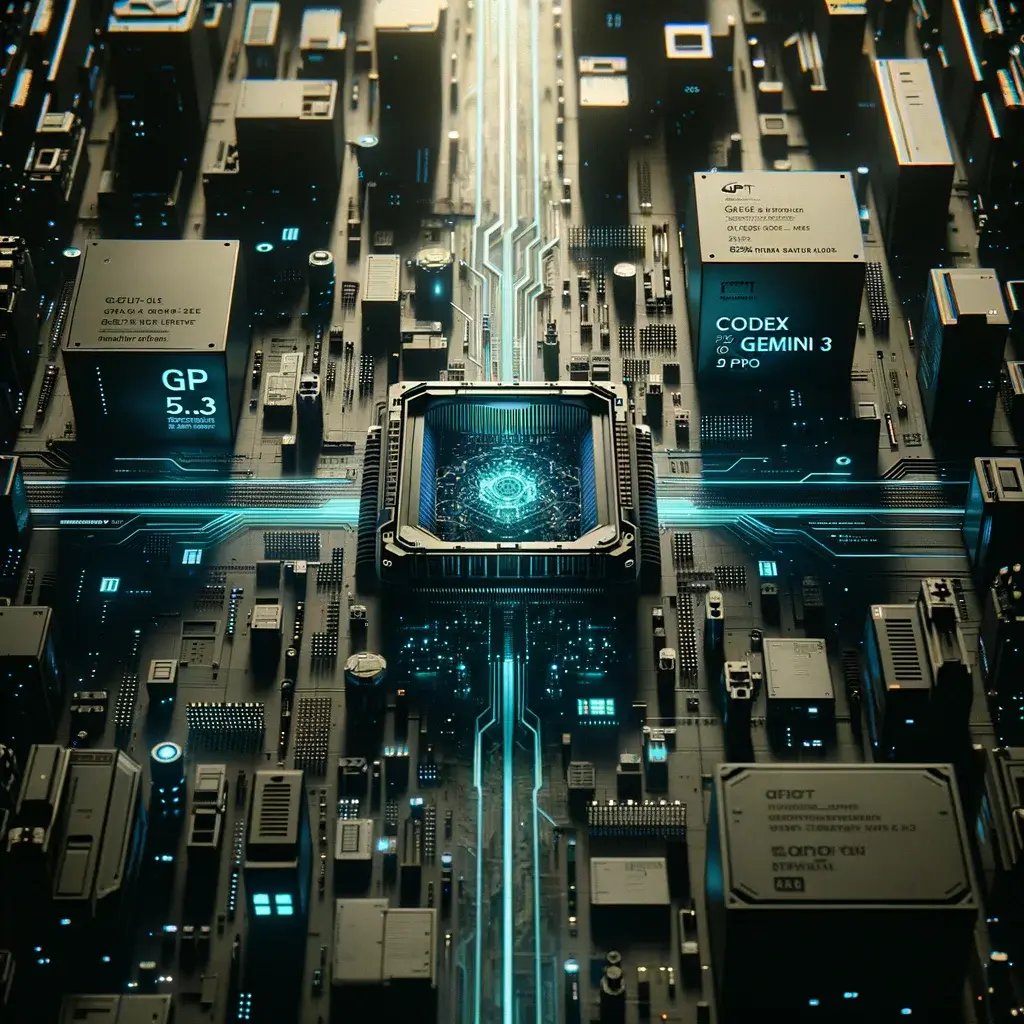
The 2026 Intelligence Frontier
As of February 8, 2026, the AI landscape has shifted from simple chat interfaces to sophisticated autonomous neural agents. The "Model War" has entered a high-fidelity phase where precision, multi-modality, and energy efficiency are the only metrics that matter. Today, we are dissecting the two titans of the early 2026 era: GPT-5.3 Codex from OpenAI and Gemini 3 Pro from Google DeepMind.
1. Granular Performance Data: The Benchmarks
Technical analysts at AnandTech and TechCrunch have recently released the Q1 2026 benchmark results. The data reveals a clear divergence in architectural priorities.
| Metric | GPT-5.3 Codex | Gemini 3 Pro |
|---|---|---|
| MMLU Score | 94.2% | 91.8% |
| HumanEval (Coding) | 91.5% | 84.2% |
| Latency (Token/Sec) | 240 t/s | 310 t/s |
| Context Window | 2.5M Tokens | 5.0M Tokens |
GPT-5.3 Codex remains the undisputed king of logic. Its refined "Thought-Trace" architecture allows it to handle complex programming tasks and technical documentation with a near-zero error rate. Conversely, Gemini 3 Pro dominates in high-velocity data ingestion. Its native ability to process 4K video feeds at 310 tokens per second makes it the fastest multi-modal engine in the arena.
The Energy Efficiency Variable
In 2026, compute-efficiency is a cornerstone of the "Elite Studio" protocol. GPT-5.3 Codex has been optimized for local inference, requiring 30% less wattage than the previous 5.2 model for equivalent tasks. This is critical for producers running local AI signal chains to prevent thermal throttling in high-end workstations.
2. Practical Use-Case Scenarios: Which One Should You Choose?
The decision between these models depends entirely on your production persona.
The Independent Podcaster
If you are running a multi-cam setup using the Rødecaster Pro II or Streamer X, Gemini 3 Pro is your superior choice. Its "Real-World Perception" allows for automated video switching and real-time visual editing based on speaker intent and facial expression with virtually no latency.
The Technical Content Creator
For creators who specialize in scripting, engineering analysis, or high-precision technical documentation, GPT-5.3 Codex is the engine of choice. Its superior performance on the HumanEval and MMLU benchmarks ensures that your content is mathematically and logically sound—preserving the "Authority" status of your brand.
3. The "Why": Zero-Latency & Future Outlook
The Impact of Local Inference
Why does local latency matter? It’s not just about speed; it's about Privacy and Signal Integrity. Running your Shure SM7B or MV7+ through a local AI signal chain for real-time vocal reconstruction (noise removal, EQ matching, and compression) requires zero-latency processing. Cloud delays of even 50ms break the "live" feel of a broadcast. 2026 is the year we brought the "Brain" into the studio.
What's Next: The Path to Full Autonomy
These February 2026 releases signal the move toward "Autonomous Production." We are rapidly approaching a state where the AI doesn't just assist—it manages. By Q4 2026, we expect to see these agents handling full production cycles, from research to the final 🛡️ Deploy the Protocol push, with minimal human intervention.
🛡️ Deploy the Protocol Master the 2026 intelligence layer. View our curated configurations in the Elite Showroom or upgrade your compute core today.
Begin Your Digital Legacy.
Our team is ready to help you implement these strategies and build a brand that lasts.
Schedule A Free Consultation