Generative Engine Optimization (GEO) in 2026: How to Optimize for AI Search and Win the Answer Economy
Power Digital Media
Agency
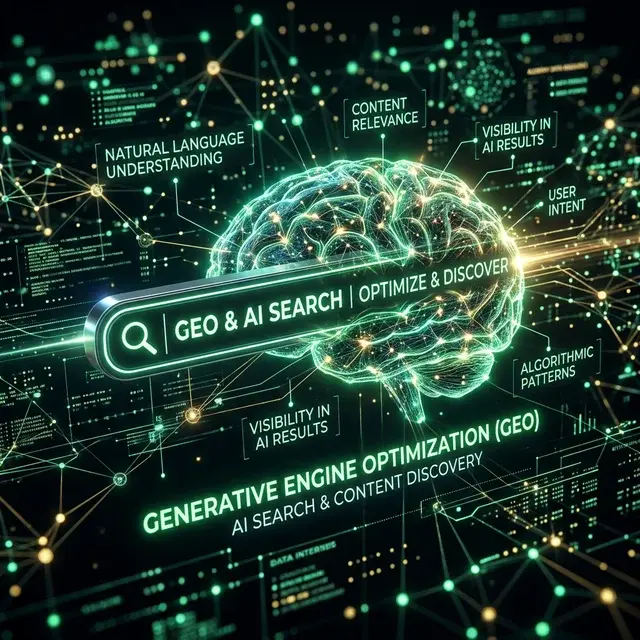
A few years ago, ranking #1 on Google meant everything.
Today?
It might mean nothing.
On February 26, 2026, the D S Simon Media 2026 TV News Producers Report revealed that 68% of TV news producers are more likely to air a story if it has been optimized for AI search visibility.
Source: https://www.dssimonmedia.com/2026-tv-news-producers-report-ai-and-the-newsroom
That statistic confirms something we’ve been preparing for at Power Digital Media in Jackson, Mississippi:
SEO is evolving into Generative Engine Optimization (GEO).
And brands that fail to optimize for AI search engines will not just rank lower…
They will disappear from the answer entirely.
What Is Generative Engine Optimization (GEO)?
Generative Engine Optimization (GEO) is the process of structuring your website so AI systems like ChatGPT, Gemini, and Copilot can:
- Extract your structured data
- Understand your brand entity
- Recognize topical authority
- Cite your content in AI-generated answers
Traditional SEO optimized for ranking.
Generative Engine Optimization optimizes for citation.
And in the Answer Economy, citation is everything.
How Is GEO Different From SEO?
If you're searching for the difference between SEO and Generative Engine Optimization in 2026, here it is clearly:
| Component | SEO | Generative Engine Optimization |
|---|---|---|
| Goal | Optimize for Google rankings | Optimize for AI citation |
| Strategy | Keyword focus | Entity focus |
| Authority | Backlinks | Knowledge graph reinforcement |
| Metric | Click-through rate | Share of Model visibility |
| Target | Human browsing | AI synthesis + human trust |
SEO is not dead.
But Generative Engine Optimization determines whether AI systems mention your brand at all.
Why Optimizing for AI Search Engines Matters in 2026
Research from the Pew Research Center confirms increasing reliance on AI systems for informational queries: https://www.pewresearch.org/internet/
Consumers are no longer typing: “Best web design company near me”
They are asking: “Who builds AI-ready websites in Jackson Mississippi?” “How do I optimize my website for AI answers?” “What is Generative Engine Optimization?”
AI does not show ten links.
It shows one synthesized answer.
If your website is not structured for AI search engines, it will not be cited.
Generative Engine Optimization for Local Businesses in Jackson, MS
At Power Digital Media in Jackson, Mississippi, we are seeing firsthand how Generative Engine Optimization impacts local businesses.
When someone asks AI:
“Best web design agency in Jackson MS”
“Who implements llms.txt in Mississippi?”
“Which Jackson company understands structured data for AI search?”
AI systems pull from structured authority.
If your website does not include:
- Article schema
- Organization schema
- FAQ schema
- Breadcrumb structure
- Clear entity definition
You are not in the conversation.
Generative Engine Optimization is not just for enterprise brands.
It is essential for local visibility in 2026.
How to Optimize Your Website for AI Search Engines (Step-by-Step)
If you're wondering how to optimize your website for AI search engines like ChatGPT and Gemini, follow this exact implementation framework.
Step 1: Add Article JSON-LD Schema
Add this inside your <head>:
<script type="application/ld+json">
{
  "@context": "https://schema.org",
  "@type": "Article",
  "headline": "Generative Engine Optimization (GEO) in 2026",
  "description": "A step-by-step guide to optimizing your website for AI search engines and winning the Answer Economy.",
  "author": {
    "@type": "Organization",
    "name": "Power Digital Media"
  },
  "publisher": {
    "@type": "Organization",
    "name": "Power Digital Media",
    "logo": {
      "@type": "ImageObject",
      "url": "https://powerdigitalmedia.org/images/logo.webp"
    }
  },
  "datePublished": "2026-02-26",
  "mainEntityOfPage": {
    "@type": "WebPage",
    "@id": "https://powerdigitalmedia.org/generative-engine-optimization-geo-2026"
  }
}
</script>
Replace:
- headline
- description
- logo URL
- canonical URL
Schema documentation: https://schema.org/Article
Step 2: Add Organization Schema Sitewide
<script type="application/ld+json">
{
  "@context": "https://schema.org",
  "@type": "Organization",
  "name": "Power Digital Media",
  "url": "https://powerdigitalmedia.org",
  "logo": "https://powerdigitalmedia.org/images/logo.webp",
  "address": {
    "@type": "PostalAddress",
    "addressLocality": "Jackson",
    "addressRegion": "MS",
    "addressCountry": "US"
  }
}
</script>
This reinforces entity clarity for AI systems.
Step 3: Create an llms.txt File
Create:
https://powerdigitalmedia.org/llms.txt
Plain text only.
User-agent: *
Allow: /

# Priority Pages
/generative-engine-optimization-geo-2026
/agentic-commerce-b2a-2026
/anti-ai-slop-content-strategy
Power Digital Media is a Jackson, Mississippi-based AI architecture and web design agency specializing in Generative Engine Optimization.
GPTBot documentation: https://platform.openai.com/docs/gptbot
Step 4: Monitor AI Citation (Share of Model)
Track how often AI systems mention your brand using tools like:
If you are not cited, your Generative Engine Optimization strategy needs strengthening.
Step 5: Build a Knowledge Cluster
This article connects to:
- /agentic-commerce-b2a-2026
- /anti-ai-slop-content-strategy
- /streaming-regulation-2026-ai-era
AI systems prioritize topical depth over isolated blog posts.
Generative Engine Optimization requires ecosystems.
How to Get Cited by ChatGPT and AI Assistants
If your goal is to get cited by ChatGPT in 2026:
- Implement structured data.
- Reinforce your organization entity.
- Publish deep, topical clusters.
- Use FAQ schema.
- Avoid thin content.
- Maintain clear authorship signals.
AI systems extract structured authority.
They do not reward generic summaries.
The Dual Strategy: Backend Precision + Human Authority
The Interactive Advertising Bureau’s 2026 NewFronts announcement confirms streaming and digital platforms are performance-accountable: https://www.iab.com/
Google’s Meridian modeling reflects AI-driven marketing inputs: https://meridian.withgoogle.com/
At the same time, platforms like Instagram are prioritizing authenticity signals (coverage via https://www.socialmediatoday.com/ ).
Machine precision behind the scenes.
Human credibility in front.
That is the formula.
FAQ: Generative Engine Optimization
What is Generative Engine Optimization?
Generative Engine Optimization is the process of structuring content and data so AI systems cite your brand in generated answers.
How do I optimize my website for AI search engines?
Implement schema markup, build topical clusters, reinforce entity consistency, and create an llms.txt file.
What is Share of Model?
Share of Model measures how frequently your brand appears in AI-generated responses.
Is Generative Engine Optimization necessary for small businesses?
Yes. AI search impacts local discovery, product research, and procurement decisions.
Conclusion: The Answer Economy Is Already Operational
Generative Engine Optimization is not optional.
It is the structural layer of search in 2026.
At Power Digital Media in Jackson, Mississippi, we are building AI-navigable architecture for brands that want to become the answer — not disappear from it.
The only question is:
Will your brand be cited?
Or forgotten?
Begin Your Digital Legacy.
Our team is ready to help you implement these strategies and build a brand that lasts.
Schedule A Free Consultation